
Running a Sex Offender Check in Baylor County
The main Baylor County sex offender check runs through the Texas Public Sex Offender Registry. Texas DPS manages that statewide source. It is the first place to check a Texas name or address because the public record comes from the state registration system. The Baylor County Sheriff is the local channel for registration appointments, verification, corrections, and reports of suspected noncompliance. These two channels serve different needs. The portal supplies public search results, while the sheriff can address a local registration issue that a web result cannot settle.
Start with a correct spelling and any known Baylor County location. Compare the returned photo, physical details, aliases, and reported address before deciding that a result concerns the person sought. A registry match reflects a statutory duty tied to a reportable conviction or adjudication. It does not show every filing, motion, or later event in the underlying case. Those documents remain in the relevant court file, and a registry entry should not be treated as a substitute for the judgment.
The official DPS search interface shows where the statewide lookup begins.
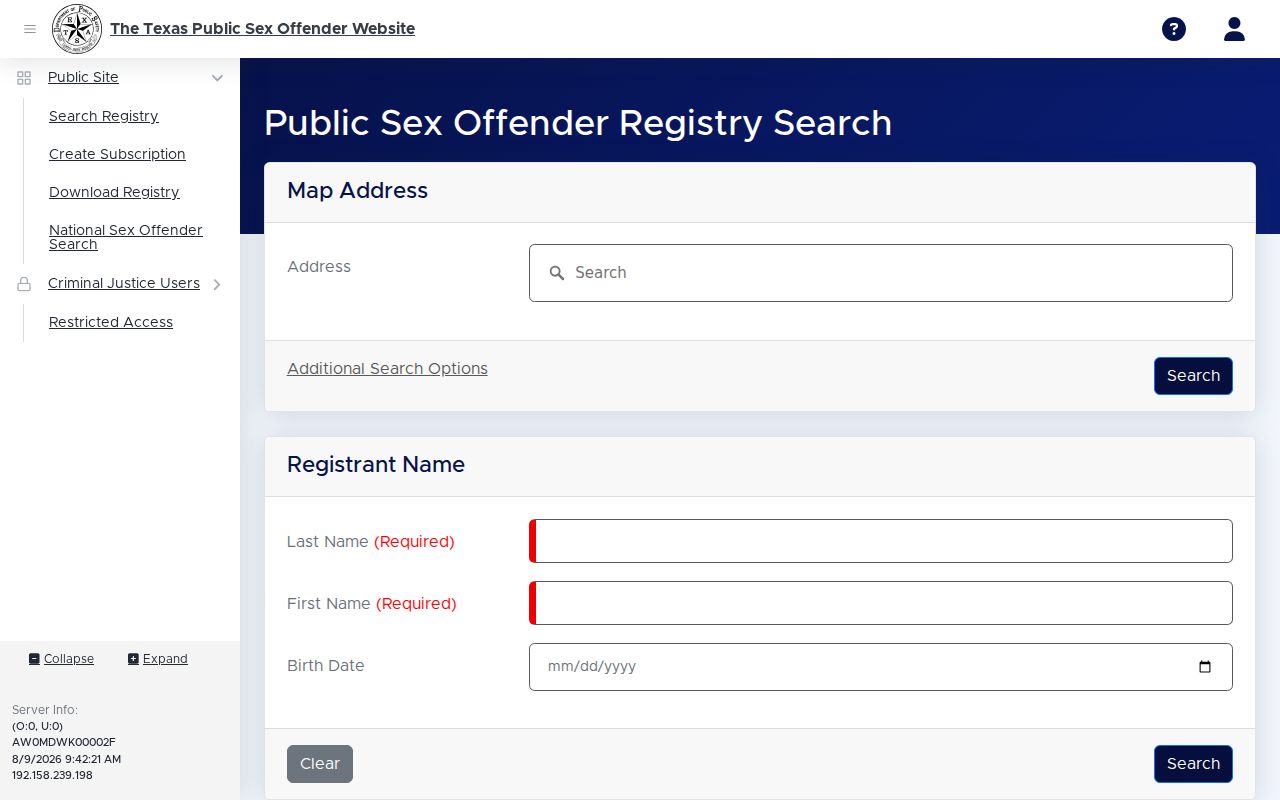
This interface is the verified public entry point for Baylor County registry records, even when a search must be retried because the state service is unavailable.
Baylor County Offender Registration Contact
Baylor County does not publish a separate online local offender list, appointment calendar, fee schedule, or verification timetable. The verified local route is the Baylor County Sheriff’s Office at 101 S. Washington Street in Seymour. Call 940-889-3333 before visiting. Ask whether an appointment is required and what identity or case documents the registrant must bring. The same number is the practical first call when an address seems wrong, a person may have missed a registration duty, or a public profile needs a local correction.
Baylor County Sheriff
101 S. Washington Street
Seymour, TX 76380-2566
940-889-3333
Call for registration, verification, correction, or suspected noncompliance.
The DPS Sex Offender Registration Program remains the state channel at 512-424-2800. A caller should describe the issue with care: the person or profile involved, the address or status in question, and why the information may be stale or incomplete. Do not try to test compliance through personal contact. Give the facts to the sheriff or DPS and let the agency determine whether a registration rule has been broken.
Searching the Texas Public Sex Offender Registry
The Texas registry is free public access, though its disclaimer may need to be accepted before a search. DPS’s portal inspection timed out during Baylor County research, so changing button names, live filters, and result controls should be read on the current interface. The research verified the broad search paths, not every temporary screen label. Use the name search when identity is known. Use the address or map route when the concern is a place in Baylor County.
- Open the Texas DPS registry and read its conditions of use before continuing.
- Choose a person search by name or a location search by address and map area.
- Review possible results against a photo, aliases, physical details, and Baylor County location.
- Open the matching public profile and check the offense, risk level, address, and registration status.
The portal’s live controls can change. These verified routes describe what to supply without inventing a required field or radius choice.
| Search Route | Input | Required | Use |
|---|---|---|---|
| Name search | Person name | Check live form | Find a known registrant or compare aliases |
| Address search | Street or place | Check live form | Review records associated with a Baylor County location |
| Map search | Map area | No fixed option verified | View the geographic search layer when available |
| Profile review | Selected result | Result dependent | Read public identity, offense, risk, and status fields |
Note: A no-result screen is not proof that no duty exists; retry the official portal and contact the sheriff when facts point to a local issue.
Baylor Registry Results Across State Lines
The National Sex Offender Public Website, or NSOPW, adds a federal search layer across participating state, territorial, and tribal public registries. It is useful when someone connected to Baylor County may have moved, uses an address outside Texas, or appears in another jurisdiction’s source. NSOPW does not replace Texas DPS. It sends the search across the public systems that supply it, so the Texas profile remains the better source for Texas-specific risk and registration fields.
The official NSOPW search page illustrates the national route that supplements a Baylor County lookup.
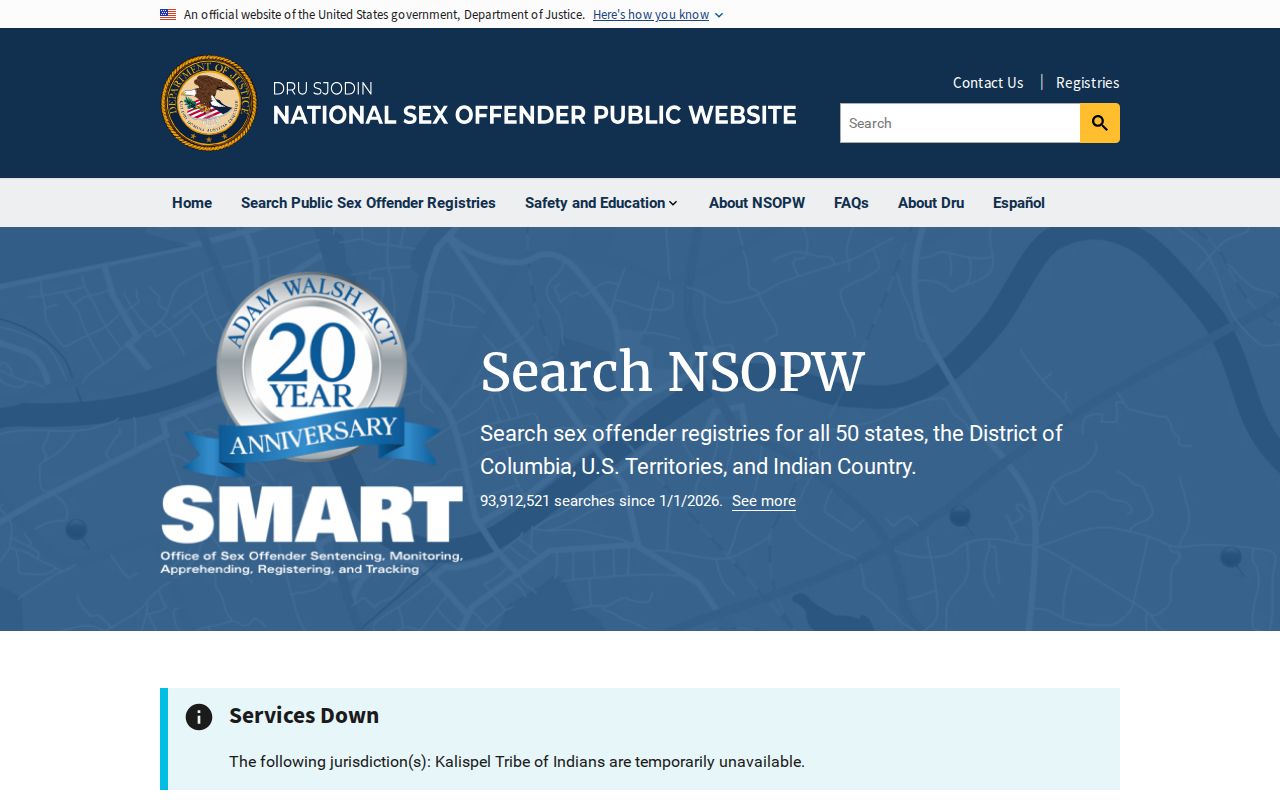
A careful searcher should compare the national result with the originating registry instead of assuming that every jurisdiction publishes the same fields or updates at the same moment.
Use both layers when a location history crosses state lines. First search DPS for the Baylor County connection. Then run the same name through NSOPW, allowing for aliases and spelling differences. If the two sources disagree, note the source jurisdiction shown by NSOPW and open that registry’s record. Contact the agency that owns the record for a correction or status question.
What a Registry Profile Shows
A Texas public registry profile combines identity details, a reportable offense, and current registration information. It can show enough to distinguish people, but Chapter 62 also keeps specified personal and victim data out of public view. Read each field on its own terms. A listed residence is a reported registration location. A numeric risk level describes an assessment of danger, while the offense category and statute control how long registration lasts.
| Name & Aliases | Full name and aliases used to identify the registered person. |
|---|---|
| Photo & Description | A recent color photo plus sex, race, and physical characteristics. |
| Residence | A public address or the location description allowed by statute. |
| Offense & Court | The reportable conviction or adjudication, offense, court, and date. |
| Texas Risk Level | A numeric low, moderate, or high assessment that is separate from registration duration. |
| Registration Status | Public registration and compliance information maintained under Chapter 62. |
| Other Public Fields | Public school or institution information and specified vehicle data when the statute applies. |
| Withheld Fields | SSN, license data, phone numbers, online identifiers, employer details, victim identity, and protected juvenile data. |
For the charging papers, plea, judgment, sentence, or later docket activity, use the Baylor County criminal court case record. The public registry is a focused safety record, not a full case history.
Baylor Offender Risk and Duration
Texas risk Levels 1 through 3 are not the federal SORNA tiers of fifteen years, twenty-five years, and life. A Baylor County profile’s risk number answers how the state assessment describes danger and the chance of continued criminal sexual conduct. Registration duration answers a different legal question. For an adult, the duty is generally lifetime or a statutory ten-year period measured from the later controlling release, discharge, or dismissal event, depending on the offense category. Juvenile and transferred cases have separate rules.
This distinction prevents a common error. Level 1 does not automatically mean ten years. Level 3 does not, by that label alone, establish the length of registration. Read the reportable offense and governing Texas category before drawing a duration conclusion. DPS or the Baylor County Sheriff can address the live registration status, but a court order and statute may be needed to resolve a legal dispute.
Registration Requirements and Levels in Texas
Texas Code of Criminal Procedure Chapter 62 governs public registry duties and data. Ordinary verification frequency depends on statutory status, not just the risk score. DPS training states that registrants outside the special categories verify annually. A person with two or more sexually violent offenses verifies every ninety days. A civilly committed sexually violent predator verifies every thirty days under a distinct intensive regime.
| Texas Category | Meaning | Duration / Verification |
|---|---|---|
| Level 1, low | Low danger; not likely to continue criminal sexual conduct | Risk does not set duration; annual verification generally applies unless another rule controls |
| Level 2, moderate | Moderate danger; may continue | Public Chapter 62 profile; duration remains offense-based |
| Level 3, high | Serious danger; will continue | Heightened notice may apply; duration remains offense-based |
| Two or more sexually violent offenses | Separate statutory verification category | Every 90 days |
| Civil commitment | Court-designated sexually violent predator under an intensive regime | Every 30 days |
Note: Texas adult registration is generally life or a statutory ten-year term, but the offense and controlling event determine the actual result.
Baylor Registry Residency Rules
Chapter 62 does not impose one blanket statewide rule barring every registrant from living within one thousand or two thousand feet of a school, park, or similar place. A court order, supervision condition, or valid local rule may impose a distance limit in a particular case. No Seymour-specific distance ordinance was verified in the Baylor County research. Treat broad claims about a universal buffer as incomplete unless the claim points to the rule that actually governs the person and address.
Public notice works on a different track. For a high-risk person or someone under civil commitment, Texas notice can include bilingual postcards within one mile in an unsubdivided area or within three blocks in a subdivided area. Specified schools also receive notice. Baylor County’s rural geography makes the distinction between subdivided and unsubdivided areas meaningful. The notice radius does not itself create a residence ban.
Report Baylor Registry Noncompliance
Report a suspected Baylor County registration problem to the sheriff at 940-889-3333. Give a clear description of the person or profile, the location involved, and the public field that appears wrong. If the issue concerns the statewide system or program rules, call the DPS sex offender registration unit at 512-424-2800. An agency can compare the report with nonpublic registration material and decide what follow-up is lawful.
Do not confront the person, household members, or neighbors. A public profile can lag a move or correction, and some details are withheld by law. Save the profile URL or note the search terms and date. That gives the sheriff or DPS a useful starting point without spreading protected information. When the concern is immediate danger, use the proper emergency channel rather than a registry inquiry.
Lawful Use and Community Notification
Registry information is published for awareness and safety planning. It can help Baylor County residents understand a reported location, recognize a public notice, and speak with children or family members about sound precautions. It must be read without vigilantism. The listing reports a legal registration status and selected public fields. It does not grant permission to threaten a registrant, target a household, trespass, damage property, or deny a lawful service.
Use registry records lawfully: Misusing Texas registry information to threaten, harass, intimidate, or commit another crime can lead to criminal prosecution. Review the official warning and duties under Texas Code of Criminal Procedure Chapter 62.
Community notification is not the same as a finding that a new offense occurred. It communicates a registration fact under Texas law. Confirm a surprising Baylor County result with DPS or the sheriff, and rely on the court file when the exact conviction and judgment matter. That approach protects public safety while keeping the search tied to official records.