
Arrest History in Baylor County
The Baylor County Sheriff’s Office handles rural law enforcement, sheriff arrests, intake and transport records. Seymour Police Department creates records for arrests within its city work, while Texas DPS or Highway Patrol holds trooper crash and arrest reports. The sheriff can help identify a record when the arresting agency is unclear. That first call matters because no single Baylor County portal combines every arrest report, holding record, booking profile, bond entry, and later court outcome.
An arrest history is a sequence of custody events, not a list of convictions. One event may yield an officer report, an intake or transport log, a receiving-jail booking, a magistrate record, a court case, and a DPS arrest cycle. The first booked charge may later be changed, rejected, enhanced, or dismissed. Baylor County does not state an online date range for arrest records. DPS says an arrest on a person’s criminal-history record remains indefinitely unless corrected or affected by lawful relief, but the public DPS name product is narrower and shows reported convictions and deferred adjudications.
Baylor County Arrests Without a Jail
The Texas Commission on Jail Standards incarceration report lists Baylor County with zero rated jail capacity. Its average daily population of six includes local people held both inside and outside the county and does not mean Baylor operates a six-bed jail. An official 2025 sheriff recruitment notice confirms that deputies perform bookings and transport people to contract jails and, when applicable, to the Texas Department of Criminal Justice. Claims of a fixed Baylor County Jail roster or a local 93-bed facility conflict with those official facts.
Call the sheriff at 940-889-3333 with the person’s identifying details and an approximate arrest time. Ask whether the person is in a Seymour holding cell, in transit, released, or at a named contract jail. A reported 2025 arrest ended with booking in Young County Jail, but that event is only an example. It does not prove that Young County receives every Baylor arrestee. Once the destination is known, use only that facility’s official phone or roster and request the booking number, intake time, booked charges, holds, bond, and release status.
How to Look Up Baylor County Arrests
A channel-complete Baylor County arrest lookup follows the event from the officer’s report to custody and then to any filed case. Names alone can produce errors, so use an incident number, arrest date, date of birth, booking number, or court cause number when it is lawful and available.
- Call the arresting agency for confirmation and an incident number. If the agency is unknown, call the Baylor County Sheriff at 940-889-3333.
- Ask the sheriff where the person is now. If transported, obtain the exact contract jail’s name and use that jail’s official roster or phone channel.
- Check the combined County Clerk and 50th District Clerk at 940-889-3322 for a jail-eligible filed case. Use Seymour Municipal Court or the proper justice court for fine-only matters.
- Use the Texas DPS Criminal History Conviction Name Search for reported statewide convictions and deferred adjudications. It is not a complete local arrest log or a fingerprint-confirmed identity check.
- Send a focused written Texas Public Information Act request to the arresting agency for an arrest or incident report and to the receiving jail for booking documents.
For a person who has moved from local custody into state prison, use TDCJ instead of continuing to search county jail channels. A DPS no-match does not prove that no arrest occurred, and a missing court case may mean the prosecutor has not filed, declined the matter, or filed at a different court level.
Baylor County Sheriff Arrest Records
The county does not publish a separately named records division, local clearance product, arrest-report fee, downloadable request form, or dedicated records portal. The Sheriff’s Office is the official starting point for sheriff-created arrest, incident, intake, transport, and Axon body or squad camera records. The official sheriff contact page shows the address, phone, fax, email, and public hours pictured below.
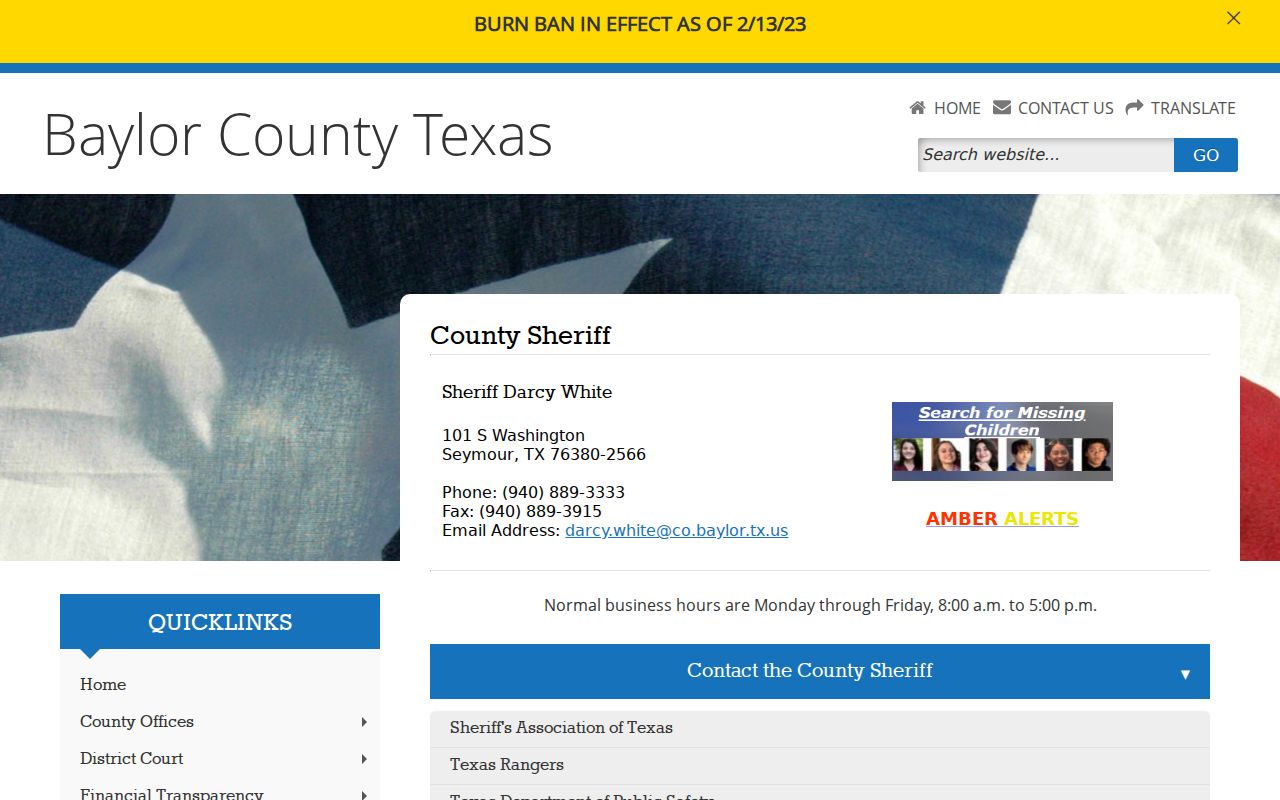
That official contact block helps a requester reach the actual custodian rather than an unofficial jail directory. Confirm before sending whether the published sheriff email is the agency’s designated electronic address for a Public Information Act request.
Baylor County Sheriff’s Office
101 S Washington
Seymour, TX 76380-2566
940-889-3333
Fax: 940-889-3915
Monday-Friday, 8 a.m.-5 p.m.
darcy.white@co.baylor.tx.us
A body-camera request should name the event date, approximate time, location, involved officer or event, and incident number. Ask for a cost estimate before work begins because no local criminal-record copy fee was found. The county’s published civil-process fee list is not an arrest-report price schedule.
What an Arrest Record Shows
Baylor County publishes no sample booking profile, so the exact fields shown by a receiving contract jail must be checked with that jail. The useful request inventory below describes records that may be created during arrest and booking; it does not claim that every field appears in one public display.
| Booking Number | The receiving jail’s event identifier; ask BCSO which facility assigned it. |
|---|---|
| Booking Date & Time | Intake time at the receiving facility, which may differ from arrest and transport times. |
| Arresting Agency | The sheriff, Seymour police, a Texas trooper, or another agency that created the arrest report. |
| Charges | The allegation recorded at intake. A prosecutor or court may later amend, reject, enhance, or dismiss it. |
| Bond | Any set amount, release conditions, or hold tied to the magistrate or court record. |
| Mugshot Policy | No Baylor public mugshot page exists. A booking photo may be held by the receiving jail, subject to access law and redaction. |
| Release Status | Whether the person remains held, was released, transferred, or entered another custody system. |
Other useful fields include incident and arrest numbers, location, probable-cause narrative, warrant or issuing court, transport timestamps, contract destination, fingerprint transaction, property inventory, and final release. Juvenile arrest records are confidential, and other protected information may be removed before release.
Baylor County Arrest Requests by PIA
No official Baylor County arrest blotter, social arrest feed, booking log, mugshot page, or public roster was located. A clear written request to the correct executive-branch agency activates the Texas Public Information Act process. The state’s request instructions pictured below emphasize writing to the body that holds the record and describing existing information, rather than asking the agency to research or answer questions.
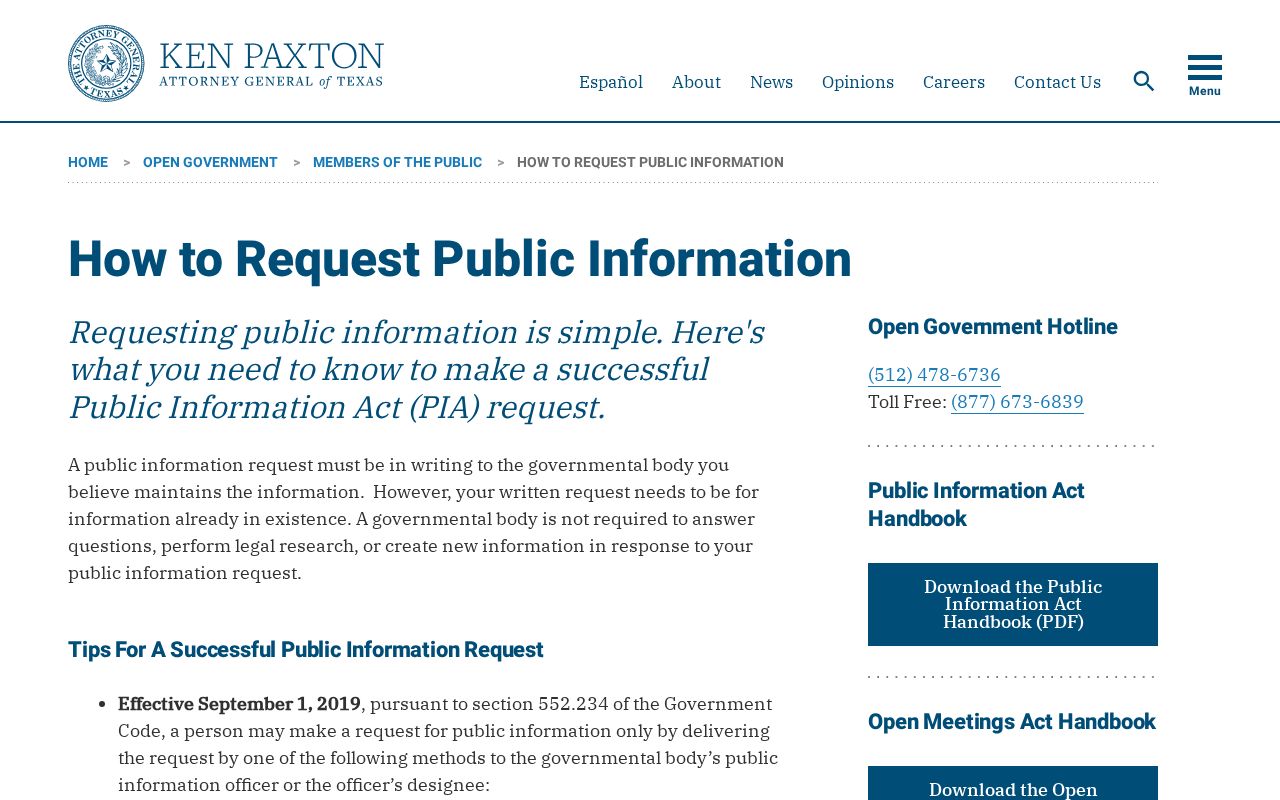
Use the image as a routing check: sheriff or police reports go to the creating agency, contract-jail booking files go to the receiving jail, and court pleadings or judgments go to the clerk under judicial access rules. A phone call can locate the custodian, but the formal request should be written.
State the record type, agency, incident or booking number, event date and time, location, desired format, contact information, and a cost cap. Texas Government Code §552.108 can protect material when release would interfere with an investigation or prosecution, while basic information about an arrest or crime is generally public. Ask for a redacted, releasable copy when part of a file is protected. If production will take longer than ten business days, the agency must give an expected production date; a request for an Attorney General withholding ruling generally also begins within ten business days.
Recent Arrests and Booking Logs
Recent Baylor County arrest records cannot be searched through a local roster because the county has no rated jail and publishes no booking log. Confirm the arrest with BCSO, Seymour police, or the responsible trooper channel. Then ask BCSO for the receiving contract jail. That jail’s official system, if it has one, is the place to check current custody and booking details. The sheriff’s transport record can bridge the gap between the local arrest and the out-of-county booking.
A current roster is only a custody snapshot. Entries may roll off after release or transfer, and each receiving jail sets its own display scope. Absence from that roster proves neither that no Baylor arrest occurred nor that a past event was erased. Court and agency files may remain after the person leaves custody. For older events, use the arresting agency, clerk, and the subject’s own fingerprint-based DPS review rather than expecting a recent-booking tool to serve as a lifetime record.
Note: Crime Stoppers and P3 Tips accept tips, but neither channel verifies arrest, warrant, bond, or custody status.
Baylor County Arrest Custody at TDCJ
A person serving a qualifying state sentence may enter the Texas Department of Criminal Justice system. The TDCJ inmate information page presents the available state-level search, email, and telephone channels shown below.
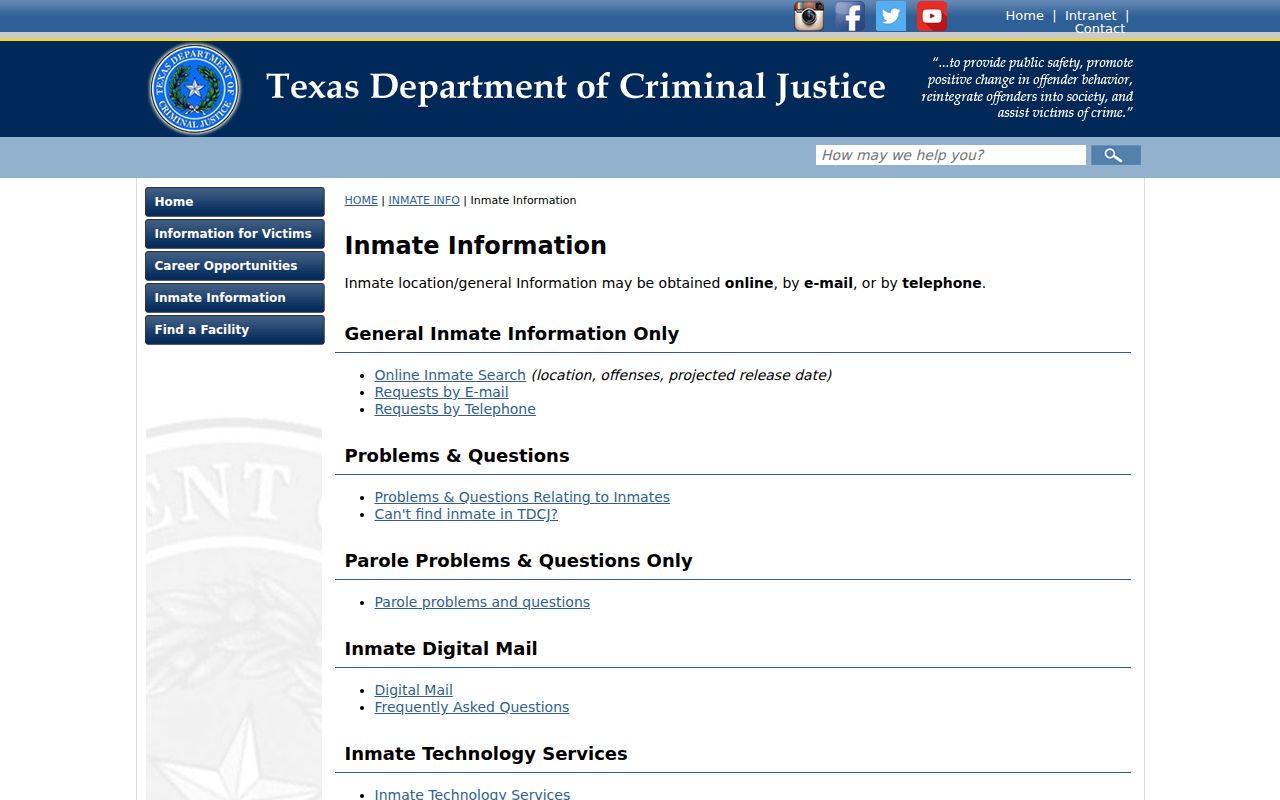
These routes concern TDCJ subjects. They do not identify someone held only in Seymour cells, in transit, or at a contract county jail.
The official TDCJ Online Inmate Search exposes the state lookup fields captured in the next image.
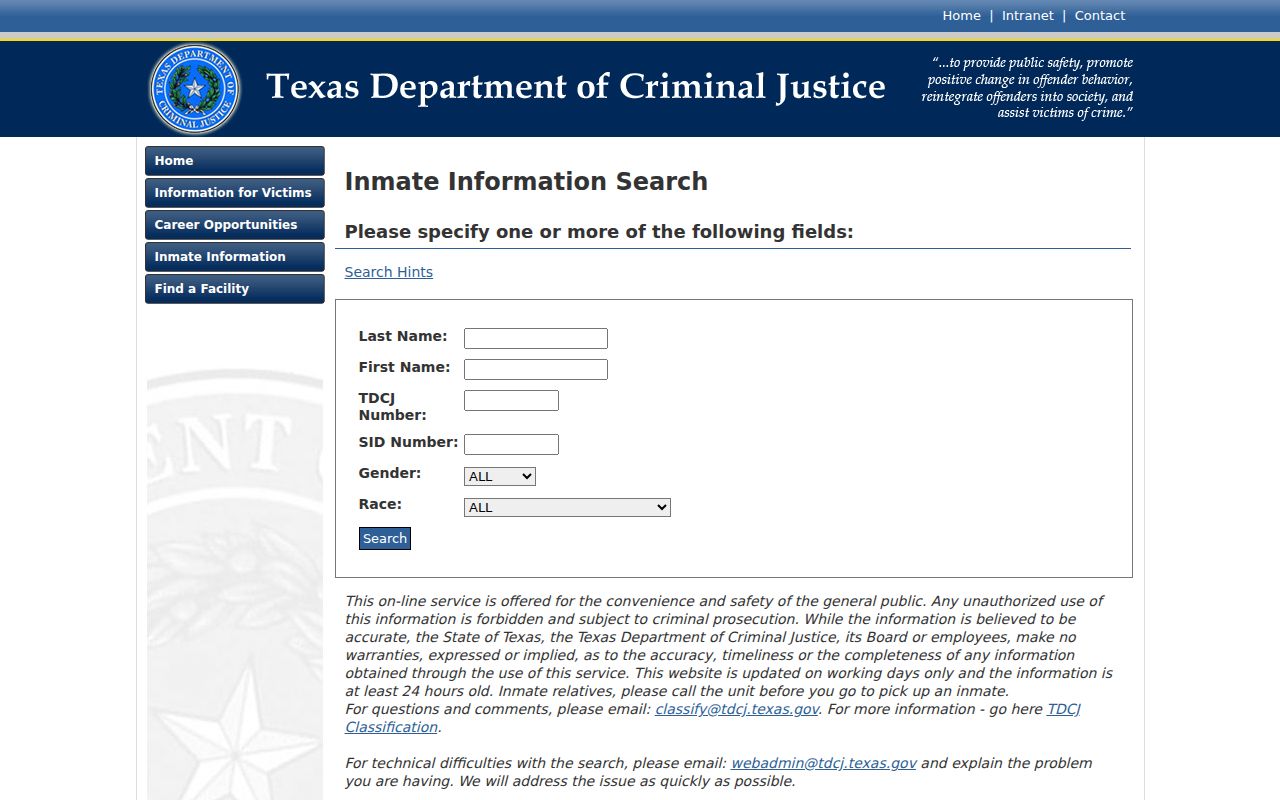
Search by last and first name, or use a TDCJ or state identification number when known; gender and race can narrow results. A detail may show the TDCJ number, current facility, conviction sentences, projected or scheduled release information, and a parole-review link. Those fields describe state custody after a court outcome, not the full Baylor arrest report.
Four Baylor County Arrest Records
The first record belongs to the arresting agency: an incident or probable-cause report that states why custody occurred. The second comes from local intake and transport, which matters greatly in Baylor County because the person may leave Seymour for a contract jail. The third is the receiving facility’s booking profile, with intake, charge, bond, hold, and release data. The fourth is any court file created after a prosecutor decides to charge. Fingerprints can also create an arrest cycle in DPS CCH, followed later by prosecutor and court reports.
These records can disagree without any one of them being fabricated. A booking charge records the allegation at intake. The filed information or indictment shows what the prosecutor pursued. The judgment supplies the result. DPS depends on later reports from local agencies, so a local file can be more current than statewide data. To correct one’s own Texas record, obtain a fingerprint-based personal review first. An incorrect arrest fact generally requires written correction from the arresting agency; a wrong or missing disposition requires certified court material for the DPS Error Resolution Unit.
Arrests vs Convictions
An arrest records a law-enforcement action and custody. A conviction is a court outcome after a plea or verdict and judgment. The Baylor arrest trail may exist even when no prosecutor files a charge, a charge is dismissed, or the person is acquitted. Expunction under Texas Code of Criminal Procedure Chapter 55A may remove qualifying arrest records, but dismissal alone does not guarantee eligibility.
| Arrest Record | Conviction Record |
|---|---|
| Created by the arresting agency, local intake, and receiving jail | Created by the court and reported through the clerk |
| Proves an arrest or booking occurred, not guilt | Shows guilt established through the court process |
| Lives with the sheriff or police, transport records, and contract jail | Lives with the proper clerk and may be reported to DPS CCH |
| May end in release, no filing, dismissal, or acquittal | May end with sentence, appeal, or later lawful relief |
For a final answer, match the arrest date and agency to the court cause number and read the judgment or dismissal order. The public DPS product reports convictions and deferred adjudications received by DPS; it is not the same as a complete arrest history. A fingerprint personal review is the reliable route for someone checking and correcting their own Texas criminal-history record.
Note: An arrest is not proof of guilt; many bookings never become filed cases or end in dismissal or acquittal.