
Criminal Cases in Baylor County Courts
Baylor County criminal court cases do not all reach the same bench. The 50th Judicial District Court hears felonies, including state-jail felonies. Baylor County Court handles Class A and Class B misdemeanors. Justice Courts in Precincts 1 and 2 keep their own fine-only cases and perform magistrate work, while Seymour Municipal Court holds city ordinance, traffic, and other qualifying fine-only matters. The court named on a citation, charging paper, or prior notice is the best routing clue.
The County Clerk and 50th District Clerk operate as one combined office at 101 S. Washington Street in Seymour. Call 940-889-3322 about district felony files or county misdemeanor files. The clerk is the custodian of filed pleadings, docket entries, judgments, and certified copies. The district judge's office is not a records portal. The official combined clerk page shows the local contact used for both court levels.
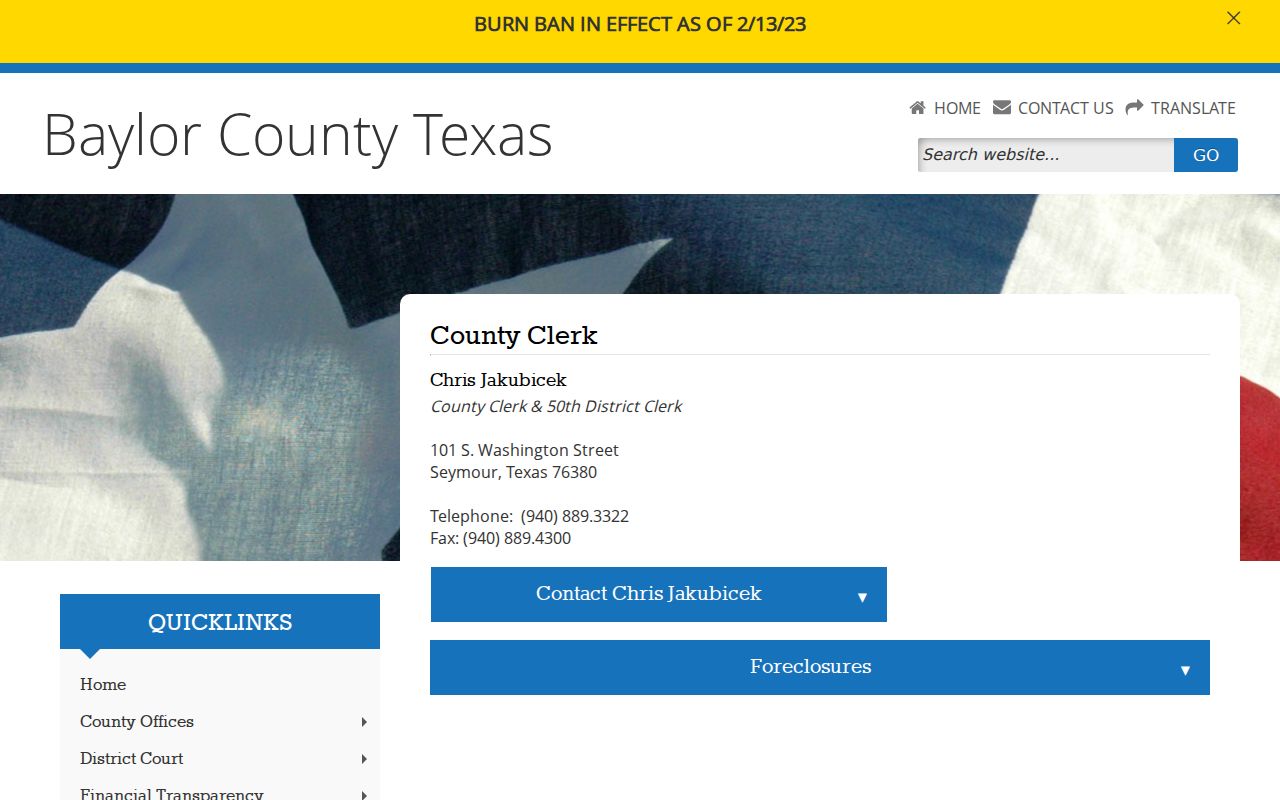
That shared counter matters: one office can identify whether a requested cause belongs on the county or district side, then explain copy and archive options.
Finding Baylor County Felony Cases
A felony search belongs with the 50th District Clerk, even though the judge lists a separate mailing address and telephone. Ask the clerk for the cause number, docket or register of actions, filed indictment, disposition, judgment, and sentence. Give a full name and an approximate filing year. A date of birth may help distinguish people when its use and release are lawful.
The official 50th District Court page identifies the court and its contact, but record requests still go to the combined clerk.
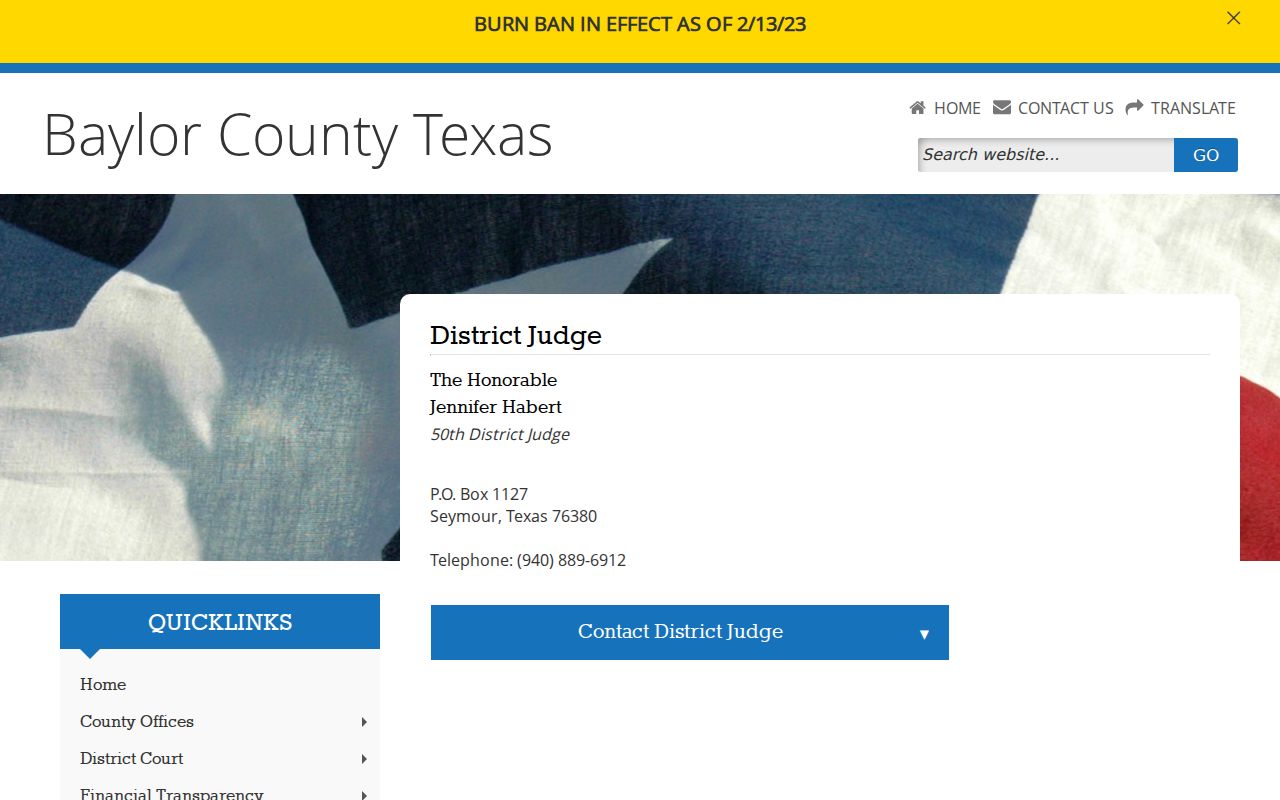
This split prevents a common delay: the judge manages proceedings, while the clerk maintains the case file the public can request.
How to Search Case Records
Baylor County advertises no official local public case-search portal, searchable archive, or published date range. Phone and counter access lead the process. Ask for the docket first because it provides a compact chronology and helps identify which documents are worth ordering. Confirm the price for plain and certified copies, along with any archive retrieval time, before sending payment.
- Classify the matter as a felony, Class A or B misdemeanor, or fine-only case.
- Call the proper clerk with the full name, approximate year, and cause or citation number if known.
- Ask the clerk to confirm the court, case number, and available index period.
- Request the docket and disposition before selecting pleadings, orders, or the judgment.
- Confirm fees and delivery timing, then order plain or certified copies as needed.
| Field Label | Type | Required | Notes |
|---|---|---|---|
| Party name | Text | Starting field | Use the full legal name; spelling variants may require another search. |
| Cause number | Text | No | The strongest identifier when it appears on a notice or prior copy. |
| Filing year | Year | No | Helps the clerk narrow a name search and locate archived material. |
| Date of birth | Date | No | Offer only when lawfully useful to distinguish people. |
| Court or case level | Choice | No | District felony, county misdemeanor, justice, or municipal. |
Which Baylor County Court Has It?
Fine-only cases can sit outside the combined clerk's files. Justice Court Precinct 1 is at 101 S. Washington and answers at 940-889-2662. Precinct 2 uses the same street address and answers at 940-889-3300. Seymour Municipal Court is at 301 N. Washington and answers at 940-889-3148. Its court page provides process and payment details, not a public name search.
The official Baylor County justice-court page lists both precinct contacts.
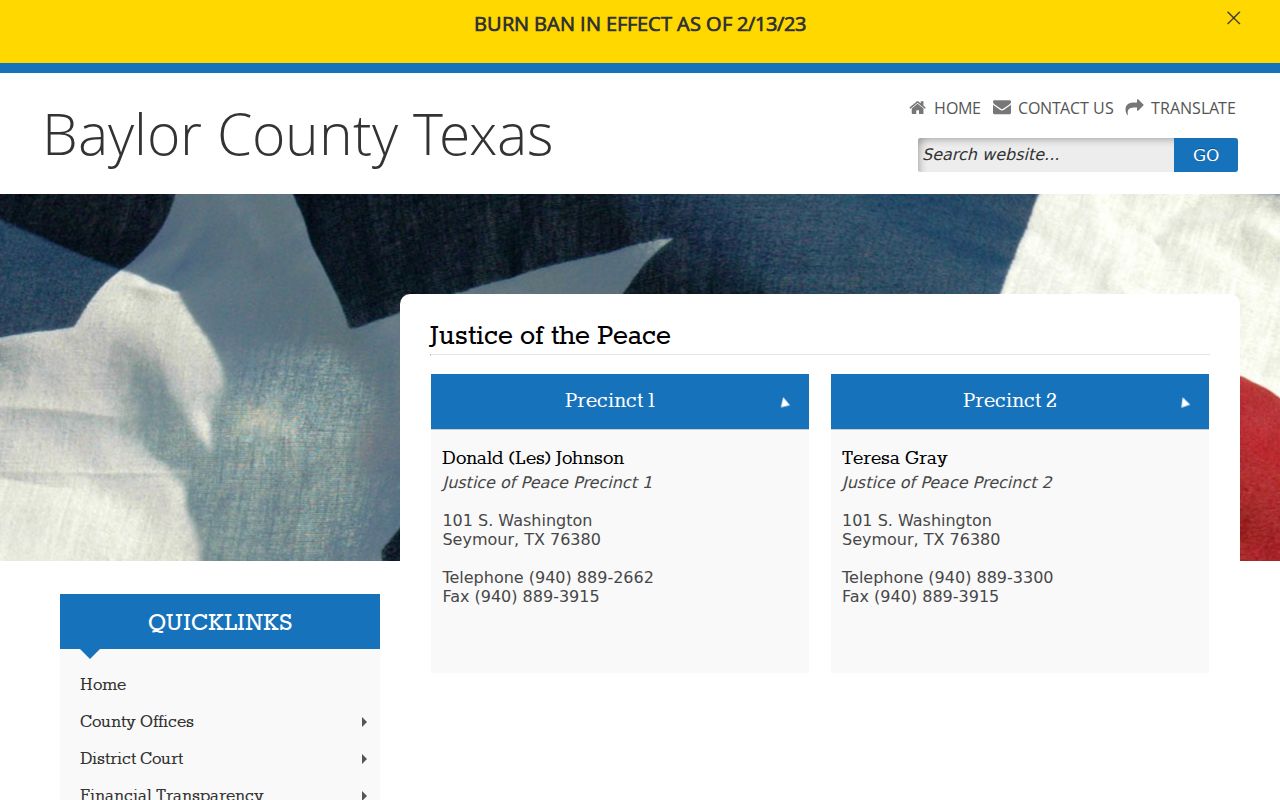
Call the issuing court shown on the ticket or warrant notice. A justice-court file does not necessarily appear through the district clerk, and a Seymour citation remains with the city court.
What the Case File Shows
A Baylor County criminal case file centers on adjudication, not the first booking entry. No official sample local case is published, so these are expected clerk-held fields rather than claims about an online display. The docket gives the timeline. The charging instrument identifies the filed allegation, while the judgment and sentence establish the final result.
| Cause Number & Court | Identifies the file and whether it belongs to district, county, justice, or municipal court. |
|---|---|
| Charging Document | A complaint, misdemeanor information, or felony indictment stating the filed charge and statute. |
| Docket Entries | A dated register of filings, settings, pleas, motions, orders, and other court actions. |
| Parties & Counsel | Names the defendant and attorneys shown in the public part of the case. |
| Disposition & Judgment | Shows conviction, dismissal, acquittal, deferred adjudication, or another recorded outcome. |
| Sentence & Conditions | May show confinement, community supervision, fines, costs, restitution, and appeal information. |
Birth dates, Social Security numbers, victim and minor identifiers, juror data, sealed filings, and confidential exhibits may be withheld or redacted. Ask for a releasable copy rather than assuming a missing field means the whole file is closed.
When Baylor County Charges Change
A booking charge records the allegation used at intake. It is not the last word. The prosecutor may file a different offense through an information or seek a grand-jury indictment. The judgment can then reflect a plea, trial result, dismissal, or other outcome. Use the final filed papers and judgment when accuracy matters.
- Information
- A prosecutor's written charging instrument, commonly used for a misdemeanor.
- Indictment
- A grand jury's written felony accusation after a true bill.
- No-bill
- The grand jury did not return an indictment on the presented charge.
- Deferred adjudication
- Community supervision in which the court defers a final finding of guilt; it is not a dismissal.
Stages of a Criminal Case
A Baylor County case may begin with arrest and magistration, which Texas arrest law generally requires without unnecessary delay and normally within 48 hours. Prosecutor screening comes next. A misdemeanor information or grand-jury indictment frames the filed case, followed by arraignment, pretrial work, a plea or trial, and a recorded outcome. Timing varies by case, and Baylor County publishes no local stage-by-stage schedule.
Case flow: Charges Filed › Arraignment › Pretrial › Plea or Trial › Disposition › Sentencing
Post-judgment motions or an appeal may add later docket entries. The court's chronology is the sound source for what occurred and when.
Baylor County Criminal Case Prosecutors
The 50th District Attorney handles felony prosecution. The County Attorney handles county misdemeanor prosecution. Those offices make or present charging decisions, but neither is the public custodian for the clerk's docket. A reader seeking an indictment, hearing history, judgment, or certified disposition should stay with the court clerk rather than redirect the records request to a prosecutor.
The official District Attorney page lists the felony prosecutor at 101 S. Washington, 940-889-2852.
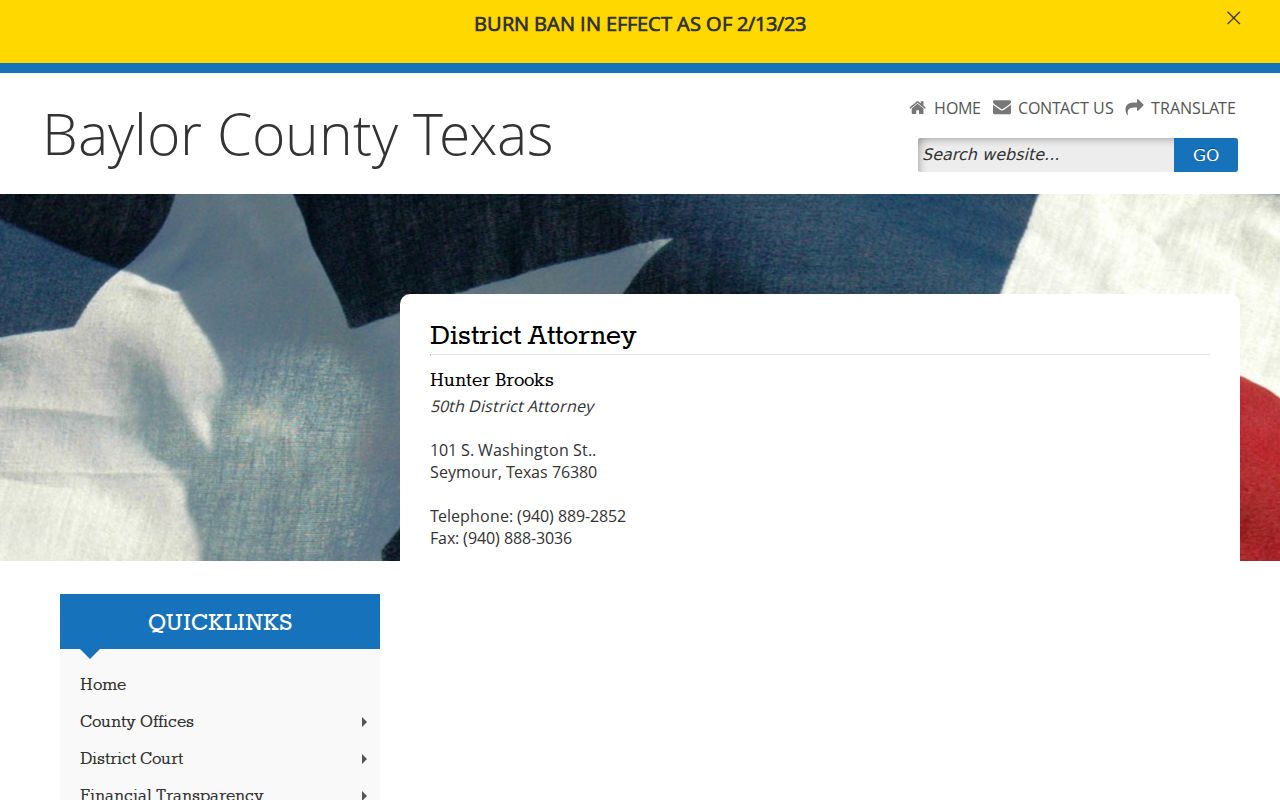
For misdemeanor charging questions, the County Attorney is at the same street address and can be reached at 940-889-5140. Filed case records still remain with the proper clerk.
re:SearchTX and Baylor Court Cases
re:SearchTX is the statewide court-record platform for participating Texas courts.
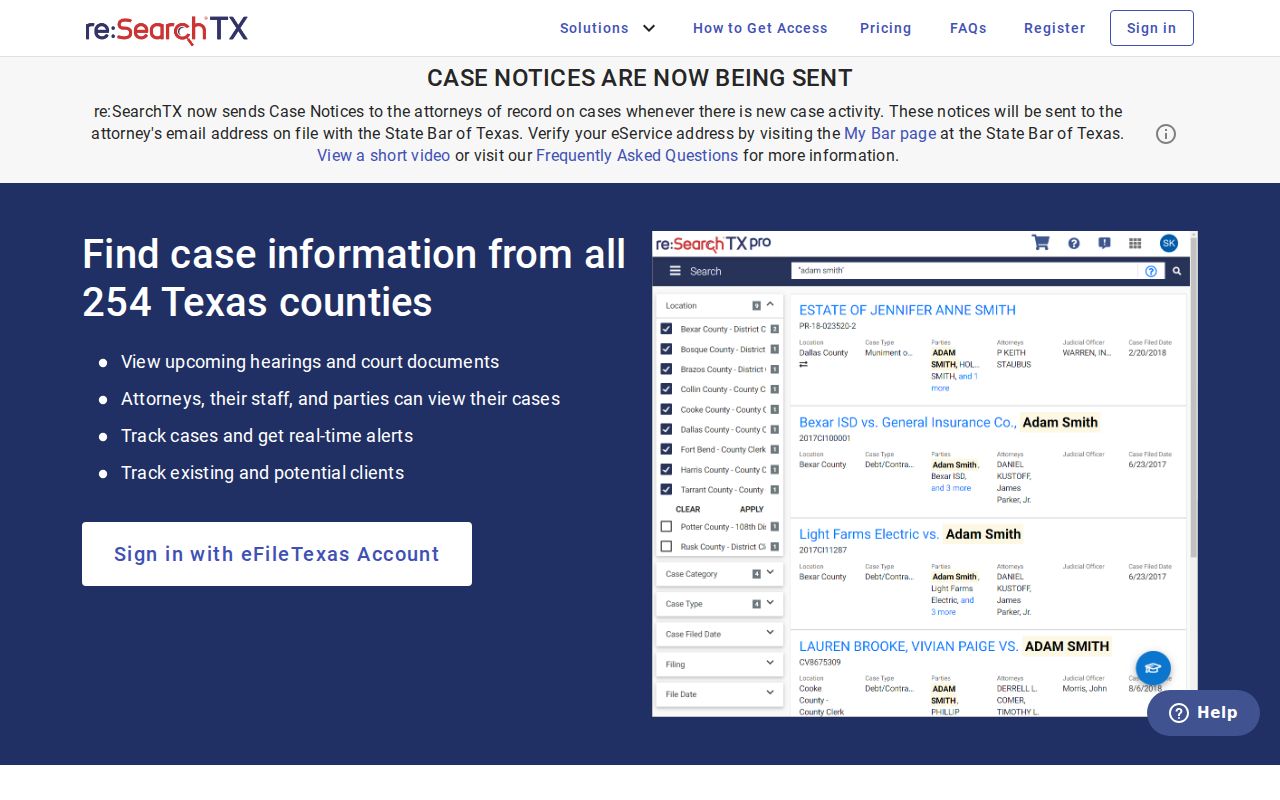
The interface offers a useful statewide starting point, yet access and document coverage depend on each participating clerk, court, and user role. Baylor County public participation was not verified. An absent result is therefore not proof that no local case exists. Baylor courts accept e-filing through supported systems, but e-filing capability does not create a public case-search portal.
Use any state result to capture the court and cause number. Then confirm the docket and obtain an official copy from the Baylor County clerk or the lower court that owns the file.
Access & Restrictions
Judicial files are not ordinary Texas Public Information Act records. Texas Rules of Judicial Administration Rule 12 and court access law govern judicial records. Send pleadings, dockets, orders, and judgments to the clerk or court that keeps them. Police reports remain with the creating law-enforcement agency, even when a report later becomes an exhibit.
Juvenile material, sealed cases, some victim and minor data, personal identifiers, juror information, and confidential exhibits can be restricted. An order of nondisclosure limits ordinary public criminal-history disclosure while preserving specified access. Expunction under Chapter 55A can direct treatment of qualifying arrest records. Neither remedy should be inferred merely because a name does not appear online.
Reading Baylor County Case Classes
The offense class helps identify the proper Baylor County court. The official Texas Penal Code Chapter 12 supplies punishment ranges.
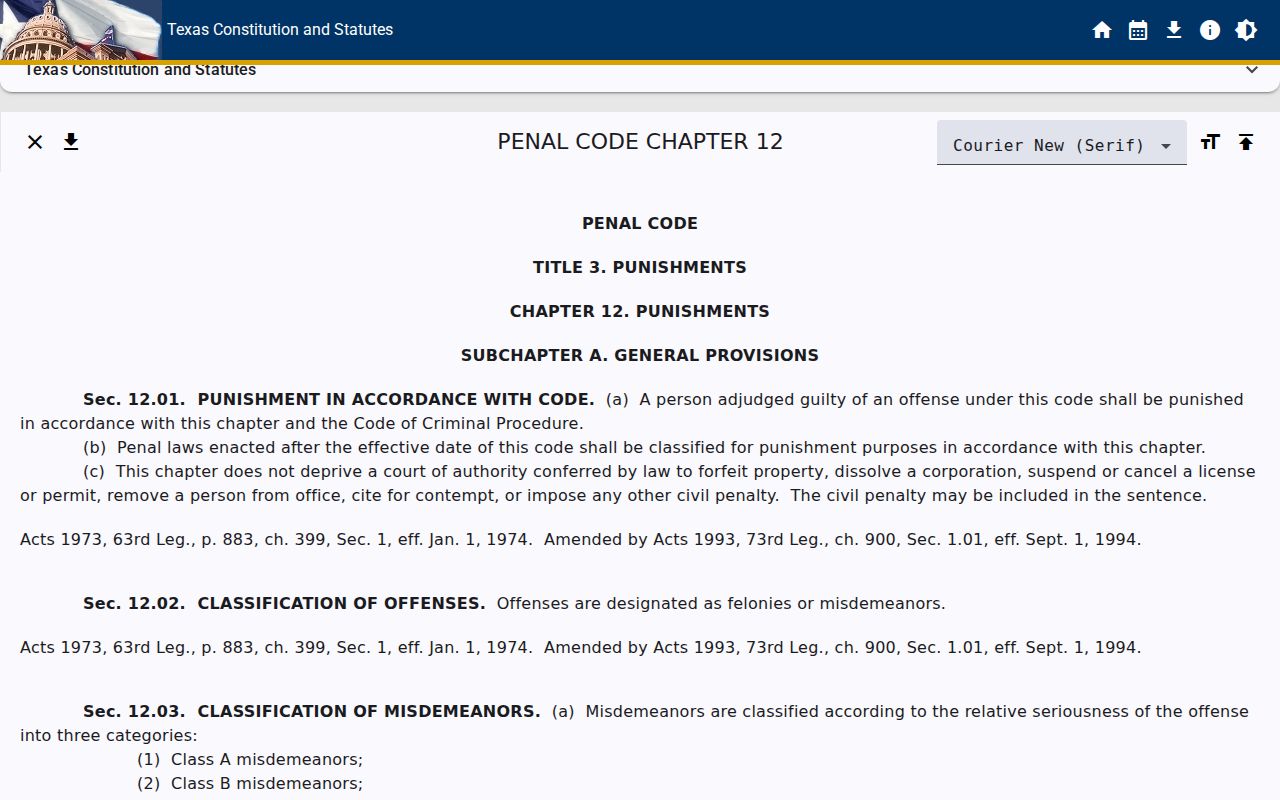
Felonies, including state-jail felonies, route to the 50th District Court. Class A misdemeanors may carry up to one year in jail and a fine up to $4,000; Class B cases may carry up to 180 days and a fine up to $2,000. Those cases belong in Baylor County Court. Class C matters are fine-only, with a fine up to $500, and may sit in a justice court or Seymour Municipal Court based on venue.
Repeat-offender and circumstance rules can alter punishment. A charge label may also change between booking and judgment, so read the statute and degree shown in the final court record.